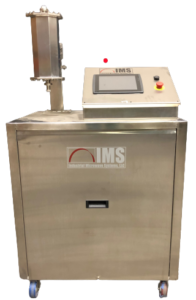
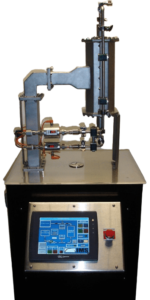
The 6kW Liquid Heating Microwave System by IMS is a unique solution for 2450 MHz processing of fluids, chemicals, pumpable foods, and more. The IMS liquid heating system can be used for many product and process applications, including heating, cooking, gelation, pasteurization and sterilization. However, its specific benefits and economic advantages are best achieved when applied to heat or shear sensitive, high viscosity and multi-phase fluids.
Benefits of Utilizing the 6kW Liquid Heating Microwave System
For a pasteurization or sterilization process, the benefits of liquid heating with microwaves include:
- Higher product quality resulting from greater retention of color, taste, texture and nutrients.
- Longer production runs due to the reduction of scale or burn-on from hot surface processes.
- Reduced costs of system sterilization and cleaning.
- Rapid deactiviation of enzymes such as polyphenol oxidase (PPO) that reduce product shelf life.
- Due to the volumetric ionic heating process, the center of any particulates may reach a higher temperature than the surrounding fluids. This is the exact opposite of what occurs when using conventional surface heaters. It enhances thermal processing and food safety.
Specifications
The following specifications are operating parameters per module:
| Frequency: | 2450 MHz |
| Power Output: | 2 – 15 kW |
| Max. Throughput: | 1 GPM (250 kg. per hour) |
| Max. Temperature: | 302°F (150°C) |
| Max. Pressure: | 150 psig (10.5 Barg) |
| Applicator Material: | Stainless Steel |
| Product Tube: | PTFE with Ceramic Pressure Sleeve (Other FDA approved materials available) |
| Tube Size: | 3/8″ – 1″ (10 mm – 25 mm) |
| Standard Tube Fitting: | Stainless Tri-Clamp Ferrule |
| Generator, Control Panel & Applicator Dimensions | |
| Length: | 1’0″ (0.30 m) 1’7″ (0.48 m) 2’8″ (0.83 m) |
| Width: | 0’8″ (0.20 m) 0’11” (0.27 m) 1’0″ (0.30 m) |
| Height: | 1’3″ (0.37 m) 1’7″ (0.48 m) 3’2″ (0.97 m) |
| Electricity: | 3 – 20 kW |
| Magnetron Cooling Water: | 0.9 – 5.4 GPM (3.5 – 20 LPM) |
IMS offers a series of modularized benchtop and commercialized in-line heaters. These standardized equipment modules can be connected in series, parallel, or a combination as plant design and production needs change or expand.
Case Studies & Success Stories
IMS 6kW Liquid Heating Microwave System offers cool tube wall surfaces, fast product heating, and short residence times to minimize fouling deposits, product degradation, and production downtime. This is shown in the following examples:
- A global petrochemical company replaced a steam heated shell-and-tube exchanger with an IMS unit. They reduced production downtime due to frequent blockage of heater tubes. This resulted from the product experiencing long residence times and high tube wall temperatures requiring excessive downtime to drill the tubes and remove product build up. The IMS unit also reduced the company’s product formulation cost. The high viscosity polymeric resin required less catalyst than previously required.
- Superior product quality with minimal color change and better nutrient retention and organoleptic properties have been achieved by a IMS liquid heating system installed in a vegetable processing facility. The overall quality of test product from the system compared far more favorably to test products obtained from other conventional heating technologies. This determined the decision to use continuous microwave heating.
- Product shelf-life of over two years with reduced storage and distribution costs are currently achieved by this food processor with all its shelf-stable pumpable vegetable products. This is possible with the IMS technology. It is an excellent method for the thermal treatment of high and low acid food products. Particularly, when rapid deactivation of enzymes is important.
- The center of particulate products may achieve higher temperature than the surrounding carrier fluid, due to volumetric heating enhancing the thermal process. This is particularly important to regulatory authorities when validating either pasteurization or sterilization processes for these products.
Microwave Heating with IMS Products
- An IMS heater requires minimal formulation changes to achieve an even temperature distribution during heating. This is rarely the case with other electro-heating technologies, such as ohmic and radio frequency, that do not benefit from the advantages of volumetric heating. This occurs from the center towards the tube wall. The result is an improvement in overall product quality and consistency of the formulation.
- This has been recognized by the Quality Assurance Department of a leading US processor of surimi and surimi seafood products. They replaced the traditional water bath test for its shear sensitive products with an IMS heating system. The cooking and gelation characteristics of the IMS test products are far closer to those experienced in production than the water bath test.
IMS technology can produce new products that conventional heaters cannot
- A New York based company is using an IMS heater for the Microwave Assisted Extraction (MAE) of plant protein cells to maximize yield and product quality of its biopharmaceutical products.
- An Alabama based organization also uses MAE with ionic liquids to maximize the extraction of biochemicals from crustacean waste products. As the pharmaceutical industry changes from batch production to continuous, IMS technology is expected to play an increasing role in the rapid sterilization of high-value, heat sensitive intravenous and other fluids.
- Combined with other thermal technologies, IMS designs can optimize final heater retrofits or new production lines. Optimum payback is obtained by utilizing an IMS unit in a process application that is difficult to control or clean when using traditional hot surface heat exchangers.
- Operating and maintenance costs can be reduced as the IMS unit has no moving parts. The non-intrusive heating process is easy to control, clean-in-place and inspect when required.
Curious to learn more about our 6kW Liquid Heating Microwave System? Contact our team today!